

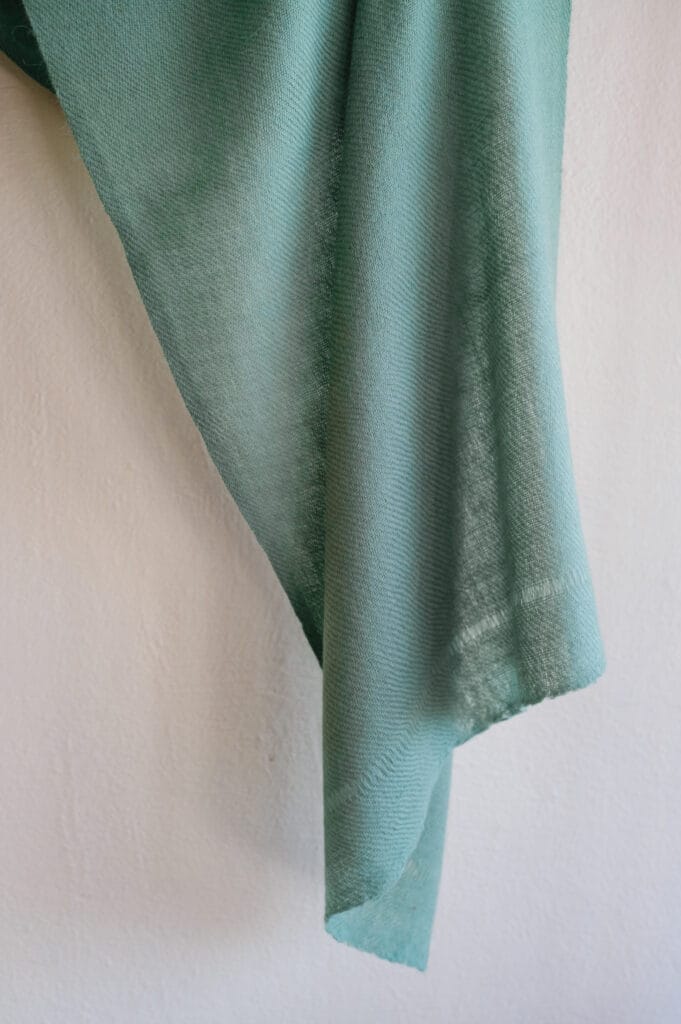
Pick up two shawls. You may notice the difference before you even know what they are made from.
One feels light and almost airy. Another has weight to it. One falls softly around your shoulders while another has a texture.
That is what makes Himalayan shawls interesting. There isn’t one thing that gives them their character. It comes from the fibre, the yarn, the weaving, the dyeing and of course the people who make them.
It Starts With the Fibre
Himalayan textiles are made from natural fibres and they don’t all feel the same.
Pashmina is fine, light and warm. Sheep wool can feel more substantial with plenty of variation in softness and texture. Yak wool has a different more earthy character. Alpaca is known for its soft feel.
So when someone says, “Its a shawl ” that doesn’t really tell you everything.
The fibre makes a difference.
So does what happens to it afterwards.
Why Pashmina Feels So Light
Pashmina is probably the thing that comes to mind when people think about a fine Himalayan shawl.
One of the things people notice is the weight.
A Pure Pashmina shawl can feel surprisingly light in your hands. You might even wonder how something that feels so delicate can keep you warm.
That’s part of its appeal.
You don’t always need a heavy layer to stay comfortable in cooler weather. A fine Pashmina can give you warmth without making you feel wrapped up in something
It is easy to carry which is one reason people often like using Pashmina while travelling.
Wool Can Feel Different
Sheep wool is a much broader category.
Some woollen shawls feel soft and smooth. Others have a rougher more rustic texture. Some are thick and substantial while others are lighter.
That variation is actually quite nice.
A woollen shawl doesn’t have to feel delicate to be comfortable. Sometimes you want something with a bit of weight when you’re sitting outside on an evening.
The weave changes the experience too.
The same fibre can feel quite different depending on how it has been spun and woven.
Then There Is Yak Wool
Yak wool has a character of its own.
The fine down of the yak is collected during the months and can be separated, spun and woven into textiles.
The finished fabric can feel warm and naturally textured.
There is also something about the colours of yak wool. Natural shades can have a depth that doesn’t look overly processed.
A yak wool shawl isn’t trying to look like a Pashmina. It doesn’t need to.
It has its look and feel.
Alpaca Has a Kind of Softness
Alpaca is another fibre that has found its place in Himalayan textiles.
Many people like it for its feel. It can be soft against the skin. Has a nice drape when woven into a shawl or stole.
Again it isn’t really about deciding which fibre is better.
You may prefer the lightness of Pashmina one day. Reach for a wool or yak shawl when you want something with more body.
Different shawls suit moments.
The Weaving Makes a Difference
Here is something that is easy to overlook.
The fibre is part of the story.
The way it is woven changes how the finished shawl behaves.
A handwoven shawl can have variations in its texture and weave. One part may not look like another. The edges may have differences too.
That’s normal.
In fact those small details are often what remind you that the shawl was made by hand.
A handwoven Pashmina shawl doesn’t have to look perfectly identical from corner to corner.
You can see a little of the makers hand in it.
Natural Dyes Add Their Character
Colour is another part of the story.
Natural dyes can produce colours that have a more organic quality. The final shade can also vary depending on the fibre and the dyeing process.
That means two handmade shawls don’t necessarily have to look alike.
That’s okay.
Mass-produced textiles often aim for consistency. Handmade textiles can have a variation.
Sometimes that variation is what makes you stop and look twice.
You Notice It Most When You Wear the Shawl
You can read about fibres all day.
Pashmina is fine. Yak is warm. Alpaca is soft. Wool comes in textures.
Descriptions only tell you so much.
The real test is wearing the shawl.
How does it sit on your shoulders?
Does it feel too heavy after an hour?
Does it move easily when you walk?
Does it feel comfortable around your neck?
These are things you notice when the shawl becomes part of your everyday life.
Sometimes the shawl you like most isn’t the one that looked the most impressive online.
It’s the one you keep picking up.
That Is What Makes Himalayan Shawls Different
There isn’t one secret, behind a shawl.
It is the combination of things.
The fibre has its character. The yarn adds another layer. The weave changes the way the fabric moves. Natural dyes can bring variations in colour.. Handwork leaves behind little details that machines are designed to remove.
Pashmina, wool, yak and alpaca aren’t really competing with each other.
They offer experiences.
That’s probably the way to understand Himalayan shawls.You don’t just see the difference. You feel it.
